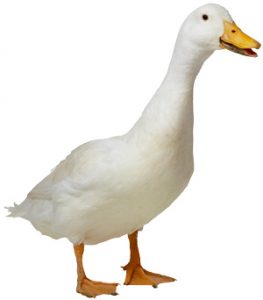

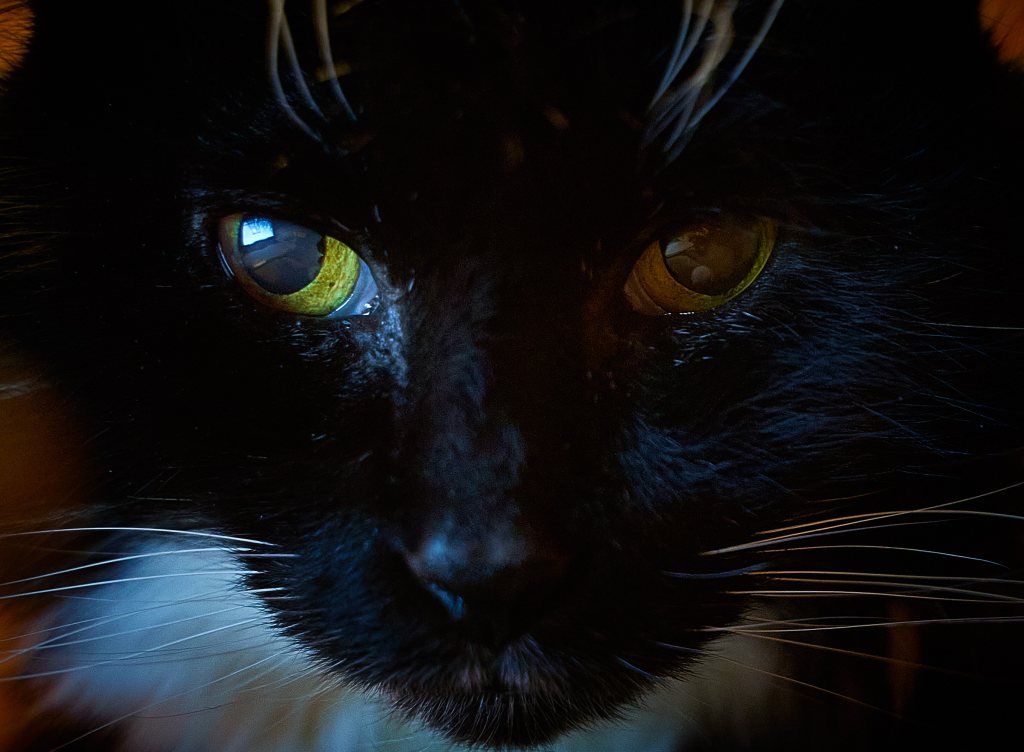
If you want to begin to know what a given “animal” is really like, you must first get down to eye level with it. We have lived so long in a myth of being “above” the “lowly” animal with the accompanying condescension, it has become very difficult to see a fellow creature as it actually is. Additionally, most of the “animals” we in contact with – dogs, cats, hamsters, cows; are four legged. Being two legged and upright we inevitably are looking down on these beings. This “looking down on” is both physical, emotional and metaphoric. It is hard for us not to feel superior to beings that are literally “below” us. This is the heirarchal legacy of adults over children, men over women, and large people over smaller people in a culture long oriented around violence and dominance.
So what happens when we go down to eye level? If we do this and succeed in leaving our preconceptions behind (no easy task), we may be surprised at what we find. The gaze that looks back at us may confound and confuse us. We may find it unfathomable. Not because it is mindless, or less intelligent than our own but because we may be unable to plumb its depth. It is “fathoms” deeper than we ordinarily go. This gaze is seldom encountered when we are looked at by a fellow human. It is a gaze only very rarely experienced in the presence of a truly evolved yogic master or holyman who has arrived at a state few humans ever attain let alone sustain. It is the most level gaze most of us will ever experience. If we have not abused this being it will look at us without judgement, without guile of any kind, and with a presence (a being in the present) that we will find hard to understand. It is a living philosophical look. I think what we call “animals” live philosophical lives. Not of abstract thoughts about the universe and morality, but lives of continual contemplation of the extant world around them. They are an embodiment of philosophy. They are always in the now and ever present in the world. They are feeling existence both in themselves and in their surroundings. They are deep, it is we who are shallow. No they do not use words (though their ability to communicate with each other has long been underrated by us) because they have no need to. We needed words because we have lost so much. Humans are attempting to recreate the world of direct experience of the world that they have lost by using words. “Animals” are present with one another and have not lost the myriad ways of nonverbal communication that are lost to most of us. They live in a landscape of immediate feelings, gestures, body language and smells that in ourselves have nearly been atrophied out of existence. We yearn for these beings, love them, hate them, and are fascinated by them because they represent all we once had and lost.
We have traded off most of our natural gifts because of our need and compulsion to live in unnatural situations. These beings whom we denigrate, live in what in a human we would consider a state of grace. It is not some idealized state of perfection – they have their pain and sorrows – but compared to us – they are in a state of profound peace much of the time. They are not consumed by the past nor obsessed with the future, they are not in a fury of judgement about others and certainly not in judgement of themselves. They are not continually trying to better themselves, radically increase their possessions, or need to define and justify themselves by great accomplishments. We are not their superiors, in fact we are petty, desparate, and in all the ways that are truly important, their inferiors. We have so much to learn, and are so poorly equipped to do so.
 The Vegan Manifesto
I have always been fascinated looking into the eye of an animal. A neighbor’s dog watches me from a window, bluejays watch me from my mother’s bird feeder, a big buck looking at me from the edge of the forest. A poet, whom I cannot recall, called it the “shiver” that passes between her and a wild animal when they make eye contact. It is a connection to a world so much bigger than ourselves. It is easy to project emotions and thoughts, both good and bad, onto the animal that is not I. However, at its core, it is really an acknowledgement of being – me, and the animal I encounter – and what we forget is that we need to recognize that “being-ness” of the other so unfamiliar to us. It is poetry, mystery, awe at the heart of the encounter…
LikeLike